

Introduction: A Movement-Focused Approach to Living Well With Parkinson’s
Parkinson’s disease is a progressive neurological condition that affects movement, coordination, posture, balance, and overall physical independence. While medications play a vital role in symptom control, movement-based therapy is equally important for maintaining functional ability and quality of life. This is where Parkinson’s physiotherapy in Mahadevapura becomes an essential part of long-term care.
At Physiokraft Physiotherapy Clinic in Mahadevapura, Bangalore, neurological rehabilitation is delivered with a patient-centered, evidence-based approach. Physiotherapy for Parkinson’s focuses on preserving mobility, improving balance, reducing stiffness, and helping individuals remain independent for as long as possible. Rather than reacting to decline, physiotherapy emphasizes proactive movement, confidence building, and functional resilience.
This comprehensive guide explains how physiotherapy supports people living with Parkinson’s disease, the scientific principles behind treatment, the benefits of structured rehabilitation, and why Physiokraft is trusted for neurological physiotherapy care in and around Mahadevapura.
Understanding Parkinson’s Disease and Its Physical Impact
Parkinson’s disease primarily affects the brain’s ability to regulate smooth, controlled movement. The condition results from the gradual loss of dopamine-producing neurons, leading to motor and non-motor symptoms that evolve over time.
Common physical challenges include:
-
- Muscle rigidity and stiffness
-
- Slowness of movement (bradykinesia)
-
- Tremors at rest
-
- Postural instability
-
- Changes in walking pattern
-
- Reduced coordination and endurance
As the condition progresses, daily activities such as walking, turning, standing up, or maintaining balance become increasingly difficult. Parkinson’s physiotherapy in Mahadevapura addresses these challenges by focusing on movement efficiency, safety, and adaptability rather than only symptom relief.
Why Physiotherapy Is a Core Component of Parkinson’s Care
Physiotherapy is not a replacement for medication but a powerful complement to medical management. Movement-based therapy helps the brain and body work together more effectively, even as neurological changes occur.
Key objectives of physiotherapy include:
-
- Preserving functional mobility
-
- Improving postural alignment
-
- Reducing fall risk
-
- Maintaining muscle flexibility and strength
-
- Enhancing confidence during movement
At Physiokraft, treatment plans are tailored based on disease stage, current ability level, lifestyle demands, and long-term goals.
Benefit 1: Improved Movement Initiation and Control
One of the hallmark challenges of Parkinson’s is difficulty initiating movement. Patients may experience freezing episodes or hesitation before walking, turning, or standing up.
Physiotherapy interventions focus on:
-
- Large-amplitude movement training
-
- Visual and auditory cueing strategies
-
- Repetitive task practice
Through consistent training, patients develop better control over movement initiation, allowing smoother transitions and improved confidence during daily activities.
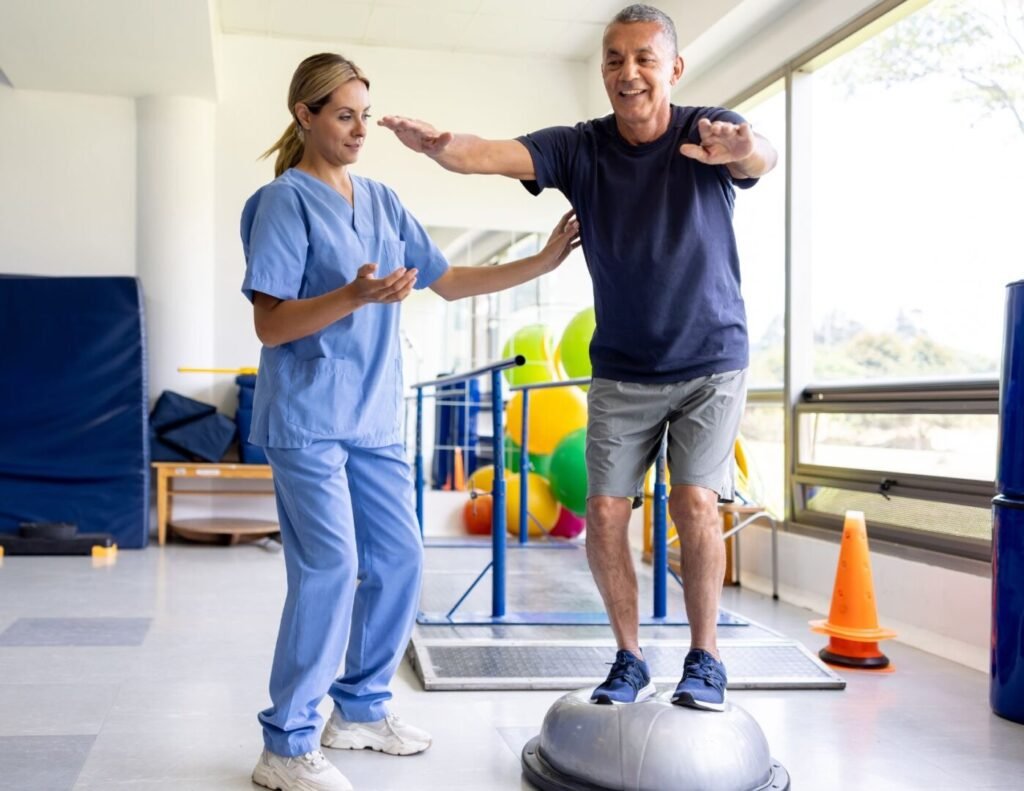
Benefit 2: Better Balance and Reduced Fall Risk
Balance impairment is a significant concern for individuals with Parkinson’s disease. Even minor balance loss can lead to falls, injuries, and fear of movement.
Physiotherapy programs emphasize:
-
- Static and dynamic balance exercises
-
- Weight-shifting drills
-
- Reaction-time training
-
- Safe recovery strategies after imbalance
By strengthening balance systems, Parkinson’s physiotherapy in Mahadevapura helps individuals move with greater stability in home and community environments.
Benefit 3: Gait Training for Safer Walking
Changes in walking pattern are common in Parkinson’s, including short steps, shuffling, reduced arm swing, and difficulty turning.
Physiotherapists address gait issues through:
-
- Step-length correction exercises
-
- Rhythm and cadence training
-
- Treadmill-based walking programs
-
- Dual-task walking practice
These methods improve walking efficiency and reduce the likelihood of freezing episodes.
Benefit 4: Posture Correction and Spinal Alignment
Stooped posture and forward head alignment can develop as Parkinson’s progresses. Poor posture not only affects appearance but also balance, breathing, and fatigue levels.
Physiotherapy focuses on:
-
- Strengthening postural muscles
-
- Improving spinal mobility
-
- Stretching tight anterior muscles
-
- Postural awareness training
Better posture supports overall movement quality and reduces discomfort during prolonged activities.
Benefit 5: Maintaining Muscle Strength Without Overexertion
Muscle weakness contributes to functional decline, yet overtraining can increase fatigue. Physiotherapy programs are carefully dosed to ensure safety and sustainability.
Strength training includes:
-
- Low-impact resistance exercises
-
- Functional strengthening movements
-
- Gradual progression based on tolerance
This approach improves endurance while preserving energy levels throughout the day.
Benefit 6: Flexibility and Rigidity Reduction
Muscle rigidity is one of the most limiting symptoms of Parkinson’s disease. Stiffness restricts movement and increases discomfort.
Physiotherapy interventions include:
-
- Gentle stretching routines
-
- Range-of-motion exercises
-
- Manual therapy techniques
Regular flexibility training helps maintain joint health and reduces movement resistance over time.
Benefit 7: Improved Coordination and Motor Planning
Parkinson’s affects the ability to coordinate complex movements. Simple actions may require more conscious effort and attention.
Physiotherapy addresses coordination through:
-
- Task-specific training
-
- Sequencing exercises
-
- Multi-directional movement drills
These activities improve motor planning and reduce movement hesitation.
Benefit 8: Enhanced Functional Independence
Daily activities such as dressing, getting out of bed, climbing stairs, or turning in tight spaces can become difficult without targeted training.
Physiotherapists work on:
-
- Bed mobility techniques
-
- Sit-to-stand strategies
-
- Turning and transfer practice
-
- Energy conservation methods
Functional training helps individuals maintain independence for longer periods.
Benefit 9: Breathing Efficiency and Trunk Mobility
Reduced chest expansion and trunk stiffness can affect breathing efficiency and endurance.
Physiotherapy incorporates:
-
- Thoracic mobility exercises
-
- Breathing coordination drills
-
- Trunk rotation movements
Improved breathing mechanics support better activity tolerance and overall vitality.
Benefit 10: Mental Confidence and Reduced Fear of Movement
Fear of falling often limits activity more than physical symptoms themselves. Avoidance of movement can accelerate functional decline.
Physiotherapy builds confidence through:
-
- Gradual exposure to challenging tasks
-
- Reassurance through supervised practice
-
- Positive reinforcement of movement success
Confidence restoration is a critical outcome of structured neurological rehabilitation.
Benefit 11: Slowing Functional Decline Through Early Intervention
Starting physiotherapy early in the disease course leads to better long-term outcomes. Consistent movement helps maintain neural pathways and muscular coordination.
Early intervention supports:
-
- Long-term mobility preservation
-
- Better adaptation to disease progression
-
- Reduced secondary complications
This proactive approach is a key focus of Parkinson’s physiotherapy in Mahadevapura at Physiokraft.
Benefit 12: Long-Term Support Across Disease Stages
Parkinson’s disease progresses differently in each individual. Physiotherapy evolves alongside the condition.
Physiokraft provides:
-
- Stage-specific rehabilitation plans
-
- Caregiver education and training
-
- Home exercise programs
-
- Ongoing reassessment and adjustment
This ensures continuity of care throughout every stage of the condition.
Advanced Physiotherapy Techniques Used at Physiokraft
Physiokraft integrates modern neurological rehabilitation approaches, including:
-
- Task-oriented functional training
-
- Sensory cueing methods
-
- Balance re-education
-
- Manual therapy for mobility support
These evidence-based techniques enhance movement quality and safety.
Physiotherapy Across Different Stages of Parkinson’s Disease
Early Stage
Focus on posture correction, flexibility, and movement efficiency.
Mid Stage
Emphasis on balance training, gait correction, and strength maintenance.
Advanced Stage
Priority shifts to fall prevention, caregiver support, and comfort-focused mobility.
Each stage requires a personalized and adaptive treatment plan.
Importance of Caregiver Involvement
Caregivers play a crucial role in supporting individuals with Parkinson’s. Physiotherapists educate caregivers on:
-
- Safe transfer techniques
-
- Home safety modifications
-
- Movement cueing strategies
-
- Exercise assistance
This collaborative approach improves outcomes beyond clinical sessions.
Home Exercise Programs and Lifestyle Integration
Patients receive structured home programs designed to:
-
- Maintain flexibility and strength
-
- Reinforce posture and balance
-
- Encourage daily movement habits
Consistency outside the clinic ensures sustained benefits.
Why Physiokraft Is Trusted in Mahadevapura
Residents of Mahadevapura and nearby areas choose Physiokraft for:
-
- Experienced neurological physiotherapists
-
- One-on-one supervised sessions
-
- Personalized care plans
-
- Modern rehabilitation infrastructure
-
- Compassionate, patient-centered approach
This trust has made Parkinson’s physiotherapy in Mahadevapura at Physiokraft a preferred choice for neurological care.
Click here to check all our services.
Holistic Rehabilitation Approach for Neurological Wellness
At Physiokraft, Parkinson’s physiotherapy in Mahadevapura is delivered through a holistic rehabilitation model that considers physical, emotional, and functional well-being. Therapy sessions are designed not only to address movement difficulties but also to enhance confidence and participation in everyday life. This comprehensive approach ensures that patients feel supported throughout their rehabilitation journey, leading to better long-term adherence and outcomes.
Role of Regular Physiotherapy in Long-Term Disease Management
Consistency plays a key role in managing Parkinson’s symptoms effectively. Regular sessions of Parkinson’s physiotherapy in Mahadevapura help maintain muscle flexibility, joint mobility, and balance over time. Structured physiotherapy reduces the rate of functional decline by reinforcing healthy movement patterns and preventing secondary complications such as stiffness, pain, and reduced endurance.
Improving Quality of Life Through Structured Movement Therapy
Quality of life is deeply connected to independence and confidence in movement. Parkinson’s physiotherapy in Mahadevapura focuses on helping individuals perform daily activities with greater ease, whether it is walking outdoors, navigating stairs, or engaging in social activities. Improved mobility and balance contribute to emotional well-being and a sense of control over daily life.
Customized Physiotherapy Plans for Individual Needs
Every individual experiences Parkinson’s differently, which is why Parkinson’s physiotherapy in Mahadevapura at Physiokraft follows a highly personalized approach. Treatment plans are customized based on disease stage, physical ability, lifestyle demands, and personal goals. This individualized care ensures that therapy remains relevant, effective, and sustainable over the long term.
Supporting Safe Movement in Home and Community Settings
One of the goals of Parkinson’s physiotherapy in Mahadevapura is to ensure patients feel safe and confident beyond the clinic environment. Physiotherapists provide guidance on safe movement strategies for home, workplace, and community settings. This includes advice on fall prevention, posture awareness, and efficient movement techniques that reduce fatigue and improve safety during daily routines.
Long-Term Benefits of Early Physiotherapy Intervention
Early initiation of Parkinson’s physiotherapy in Mahadevapura offers significant long-term benefits. Patients who begin physiotherapy early often experience better mobility preservation, improved balance, and enhanced adaptability as the condition progresses. Early intervention empowers individuals with the tools and strategies needed to manage symptoms proactively rather than reactively.
Conclusion: Movement, Confidence, and Quality of Life
Parkinson’s disease presents ongoing challenges, but movement remains a powerful tool for maintaining independence and dignity. With the right guidance, structured therapy, and consistent support, individuals can continue to live active and meaningful lives.
Choosing Parkinson’s physiotherapy in Mahadevapura at Physiokraft means investing in evidence-based care, personalized rehabilitation, and long-term movement confidence. Physiotherapy is not just about managing symptoms—it is about preserving freedom, safety, and quality of life at every stage.