

Mid back pain is a common problem that can affect people who spend long hours sitting at a desk, working on computers, driving, exercising, or performing repetitive activities. The middle portion of the back, known as the thoracic spine, extends from the base of the neck to the bottom of the rib cage.
If you are experiencing mid back pain in Whitefield, understanding the possible cause is an important first step toward appropriate treatment and recovery.
At PhysioKraft, Mahadevapura is a top rated Physiotherapy Clinic where expert Physiotherpist provides assessment that can help identify movement, muscle, joint, and lifestyle factors that may be contributing to your pain and help develop an individualized rehabilitation program.
What Is Mid Back Pain?
Mid back pain refers to discomfort in the thoracic region of the spine. It can feel like an ache, stiffness, tightness, burning sensation, or localized pain between the shoulder blades.
Some people experience pain only during movement, while others notice discomfort after sitting or standing for long periods.
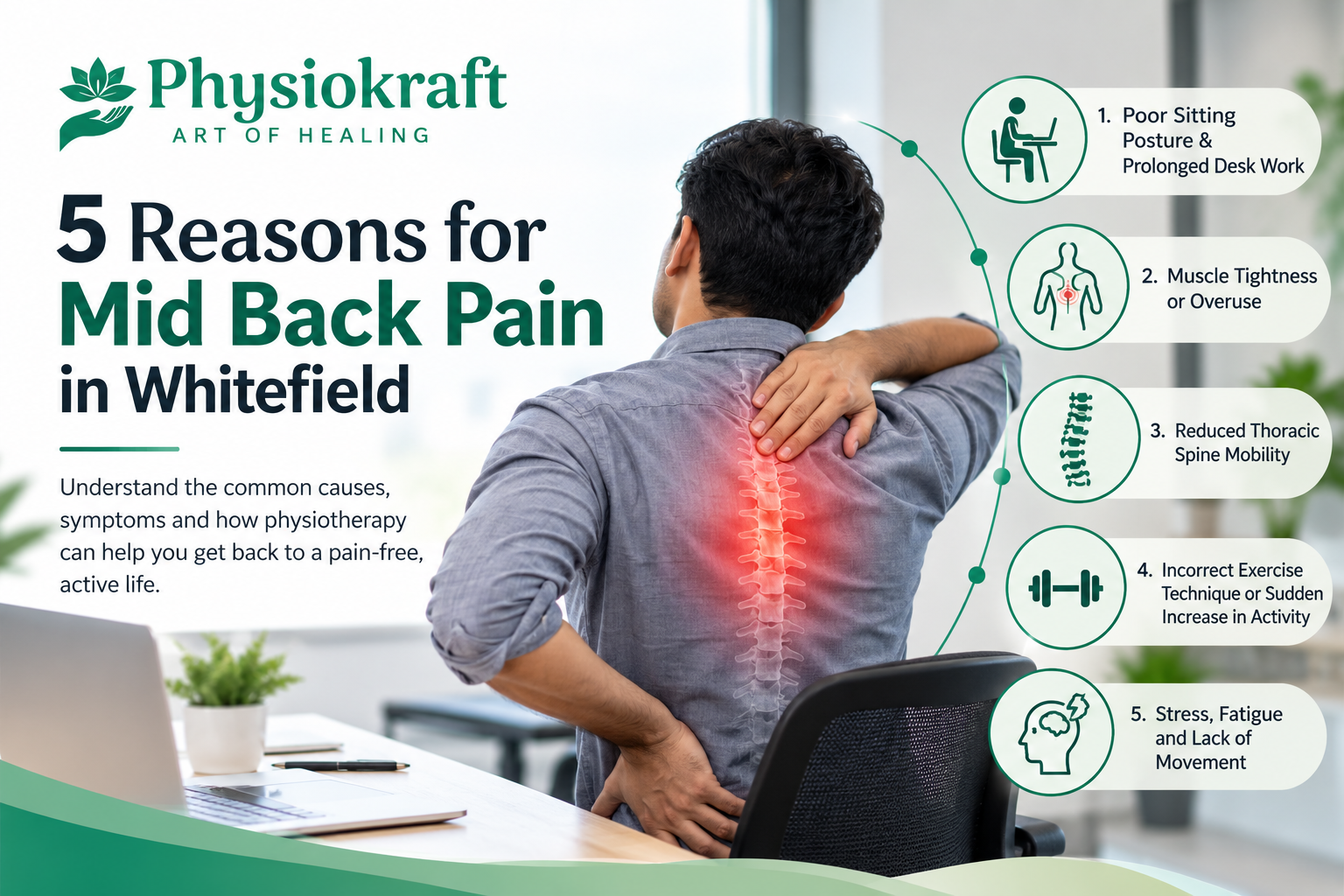
5 Common Reasons for Mid Back Pain
1. Poor Sitting Posture and Prolonged Desk Work
Spending several hours sitting at a computer can contribute to mid back discomfort, particularly when the workstation setup encourages prolonged slouching or a rounded upper back.
When you remain in the same position for long periods, certain muscles may become overloaded while others may become less active.
People working in Whitefield’s technology and corporate offices may spend much of their day at a desk, making movement breaks and appropriate workstation setup important parts of back-care strategies.
Common symptoms may include:
- Pain between the shoulder blades
- Mid back stiffness after sitting
- Discomfort while using a laptop
- Tightness around the upper back and shoulders
- Pain that improves after moving around
2. Muscle Tightness or Overuse
The muscles surrounding the thoracic spine and shoulder blades help maintain posture and control upper-body movement.
Repetitive activities, sudden increases in exercise, prolonged static positions, or poor movement patterns can place additional stress on these muscles.
This may result in muscular soreness, tenderness, stiffness, or discomfort during certain movements.
common muscles which formed Muscular knots are:
Rhomboidus major/Minor
Leavtor Scapulae
3. Reduced Thoracic Spine Mobility
The thoracic spine needs to move during activities such as reaching, rotating, bending, and lifting.
Limited thoracic mobility can sometimes make everyday movements less comfortable and may affect how the neck, shoulders, ribs, and lower back move.
A physiotherapist can assess thoracic movement and determine whether mobility limitations are contributing to your symptoms.
4. Incorrect Exercise Technique or Sudden Increase in Activity
Starting a new workout routine, suddenly increasing training volume, or performing exercises with inappropriate technique can contribute to mid back pain.
Exercises involving pulling, lifting, rowing, overhead movements, or repetitive trunk rotation can place additional demands on the thoracic region.
A gradual progression of exercise and appropriate technique can help reduce unnecessary strain.
5. Stress, Fatigue and Lack of Movement
Long working hours, inadequate movement throughout the day, and general physical fatigue can contribute to increased muscle tension and stiffness.
Stress does not necessarily mean that pain is “just in your head.” Pain is influenced by multiple factors, including physical, psychological, and environmental factors.
Regular movement, adequate recovery, appropriate exercise, and addressing contributing factors can be useful components of managing persistent back pain.
Symptoms That May Occur With Mid Back Pain
Depending on the underlying cause, you may experience:
- Pain between the shoulder blades
- Thoracic spine stiffness
- Muscle tightness
- Pain during rotation
- Discomfort after prolonged sitting
- Pain when reaching or lifting
- Reduced upper-back mobility
The pattern and severity of symptoms can vary from person to person.
How Physiotherapy Can Help With Mid Back Pain
Physiotherapy begins with an assessment rather than simply treating the location of pain.
A physiotherapist may assess:
- Thoracic spine movement
- Shoulder and neck mobility
- Muscle strength and endurance
- Posture and movement patterns
- Workstation and ergonomic factors
- Exercise technique
- Daily activities that may aggravate symptoms
Depending on the findings, treatment may include exercise therapy, mobility exercises, strengthening, manual therapy when appropriate, movement retraining, and ergonomic advice.
The goal is to address contributing factors and gradually improve your ability to perform everyday activities.
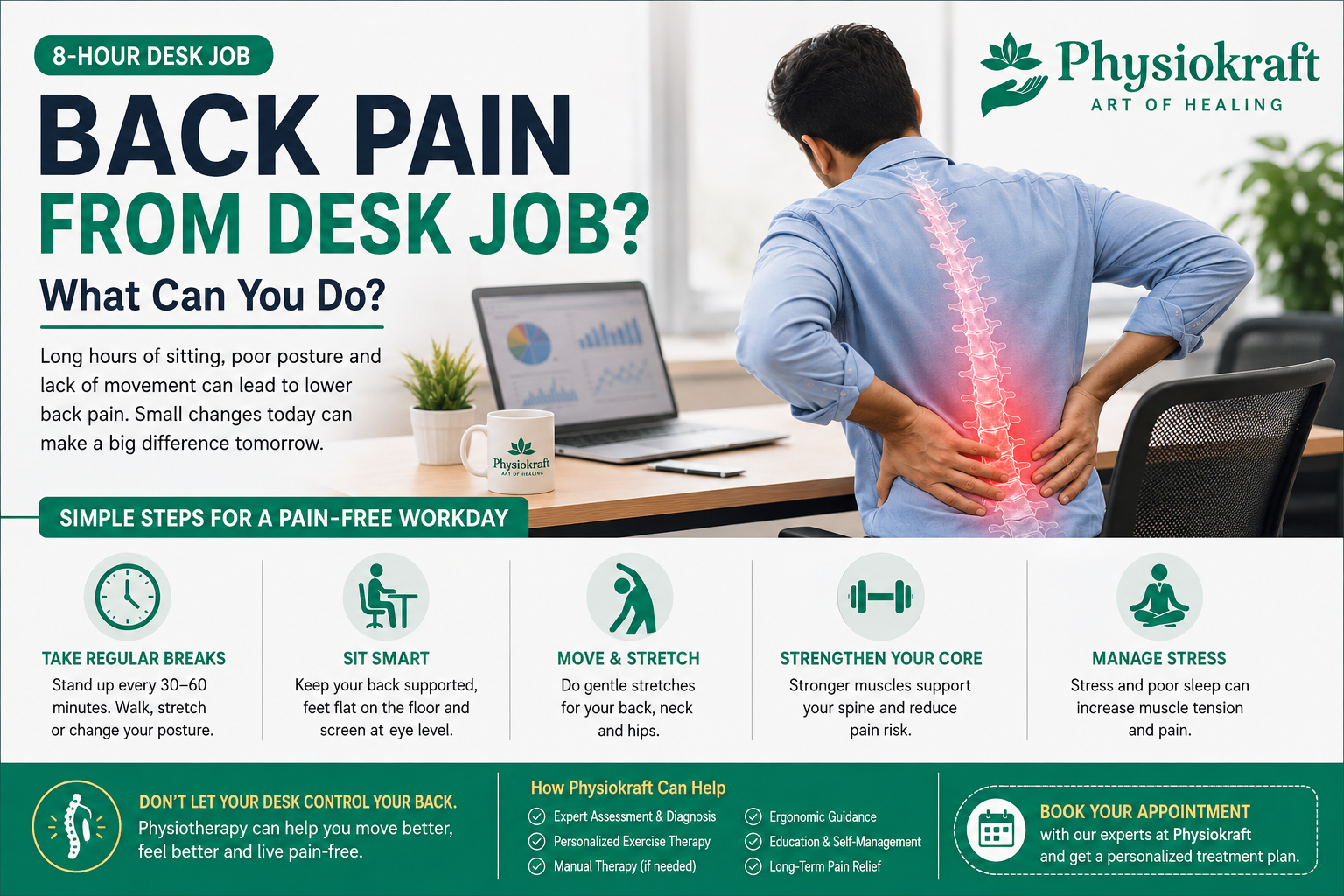
Mid Back Pain From a Desk Job
If your work involves sitting for many hours, completely avoiding sitting may not be realistic.
Instead, consider building regular movement into your workday:
- Change position regularly.
- Take short movement breaks.
- Adjust your monitor and workstation appropriately.
- Avoid remaining in one posture for prolonged periods.
- Include regular physical activity outside working hours.
- Follow an individualized exercise program if pain persists.
Remember that there is no single “perfect posture” that everyone must maintain all day. Movement variety and the ability to change positions are important.
When Should You Get Your Mid Back Pain Assessed?
Consider consulting a healthcare professional if your pain is persistent, recurrent, worsening, or interfering with work, sleep, exercise, or daily activities.
Seek prompt medical assessment if back pain occurs with concerning symptoms such as significant trauma, unexplained weight loss, fever, severe or progressive neurological symptoms, chest pain, difficulty breathing, or other symptoms that may indicate a condition requiring medical evaluation.
Physiokraft Physiotherapy in Whitefield
If you are looking for mid back pain treatment in Whitefield, a physiotherapy assessment can help identify factors contributing to your symptoms and guide an appropriate rehabilitation program.
At PhysioKraft, treatment may include clinical assessment, exercise therapy, manual therapy where appropriate, mobility training, strengthening, and ergonomic guidance based on individual needs.
The aim is not simply to reduce pain but to help you improve movement, function, and confidence in your daily activities.
Frequently Asked Questions
Is mid back pain common with desk jobs?
Mid back discomfort can occur in people who spend prolonged periods sitting or working at a computer. However, the cause can vary, so persistent symptoms should be appropriately assessed.
Can physiotherapy help mid back pain?
Physiotherapy may help depending on the underlying cause. Assessment can identify relevant mobility, strength, movement, and activity-related factors and guide an individualized treatment plan.
How long does mid back pain take to improve?
Recovery time varies depending on the cause, duration, severity, contributing factors, and individual response to rehabilitation.
Should I exercise with mid back pain?
Some forms of exercise may be appropriate, but the right exercises depend on the individual’s symptoms and assessment. If an activity significantly increases pain, seek professional guidance.
Where can I get physiotherapy for mid back pain in Whitefield?
PhysioKraft provides physiotherapy and rehabilitation services for musculoskeletal conditions, including back and neck-related problems. An assessment can help determine an appropriate treatment approach.
Book a Physiotherapy Assessment
Experiencing persistent mid back pain in Whitefield? A professional assessment can help identify potential contributing factors and determine an appropriate rehabilitation plan.
PhysioKraft – Physiotherapy Clinic
📍 Mahadevapura, Bangalore
📞 Contact PhysioKraft for an appointment.