
Experiencing shin pain while running or walking? Learn about common causes, symptoms and physiotherapy treatment for Shin pain Treatment Mahadevapura, Bangalore.At Physiokraft Physiotherapy Clinic we guide them with proper assessment, therapy planning and rehab plan, this blog provide the details study about the Shin-Pain Treatment Mahadevapura and we will explain how Physiotherpy can help in mahadevapura
What is Shin-Pain Therapy in Mahadevapura?
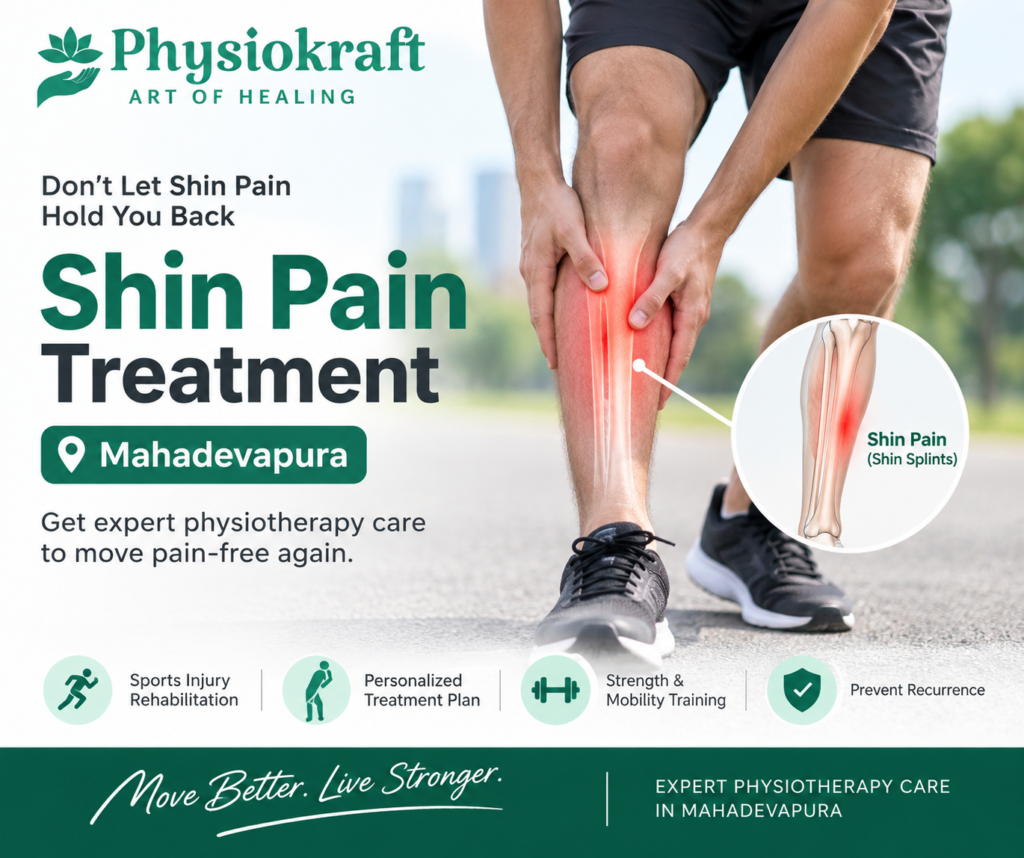
Shin splints are a common overuse injury that causes pain along the shin, particularly around the inner or front portion of the lower leg. The medical term commonly used for shin splints is Medial Tibial Stress Syndrome (MTSS).
Shin splints are frequently seen in runners, athletes, people who have recently started exercising, and individuals who suddenly increase their walking, running or jumping activities. Repetitive loading of the lower leg can place increased stress on the muscles, tendons and bones around the tibia.
Although shin splints are often manageable with appropriate activity modification and rehabilitation, persistent or severe shin pain should not simply be ignored because other conditions, including a tibial stress injury or stress fracture, can cause similar symptoms.
What Causes Shin-Pain Mahadevapura?
There is usually no single cause of Shin Pain. They can develop when the lower leg is repeatedly exposed to loads that exceed its ability to adapt.
Common contributing factors include:
- Suddenly increasing running distance or intensity
- Starting a new exercise program
- Running or exercising on hard surfaces
- Excessive jumping or high-impact activities
- Inadequate recovery between workouts
- Poor or inappropriate footwear
- Changes in running or training technique
- Muscle weakness or poor lower-limb conditioning
- Certain foot and lower-limb biomechanical factors
- Returning to sport too quickly after a break
Research suggests that the development of medial tibial stress syndrome is multifactorial and may involve training-related and biomechanical factors.
Sudden Training Changes Are a Common Trigger
One of the most common scenarios is increasing exercise too quickly.
For example:
A person who has been inactive for several months suddenly starts running 5 km every day.
The muscles and bones of the lower leg may not have sufficient time to adapt to the increased load. This can contribute to the development of shin pain.
What Does Shin-Pain Feel Like?
Shin splint symptoms can vary from person to person.
Common symptoms include:
- Pain along the inner or front portion of the shin
- Tenderness when touching the affected area
- Dull or aching pain during or after running
- Pain that increases with high-impact activities
- Lower-leg tightness
- Discomfort after increasing training intensity
- Pain that improves with rest
In many cases, the pain is relatively diffuse along the shin rather than being confined to one very small point.
Shin Splints vs Stress Fracture
This is an important distinction.
Shin splints and stress fractures are not the same condition.
Shin splints generally produce more diffuse tenderness along the shin, whereas a stress fracture may cause more focal tenderness. Persistent, severe or worsening pain needs proper assessment to determine the cause.
You should seek professional assessment if:
- Pain is severe
- Pain continues even after reducing activity
- You have very localized bone tenderness
- Pain is progressively worsening
- There is significant swelling
- You cannot comfortably walk or bear weight
- Symptoms aren’t improving with appropriate activity modification
Don’t assume every type of shin pain is simply a shin splint.
How Are Shin-Pain Treatment Mahadevapura Diagnosed?
A physiotherapist or sports healthcare professional will usually begin with a detailed assessment.
This may include:
1. History
Your physiotherapist may ask about:
- When the pain started
- Recent changes in training
- Running distance and frequency
- Exercise intensity
- Type of surface you exercise on
- Previous injuries
- Footwear
- Pain during and after activity
2. Physical Assessment
The assessment may examine:
- Shin tenderness
- Calf muscle flexibility
- Ankle mobility
- Lower-limb strength
- Foot and ankle mechanics
- Running or walking pattern
- Hip and knee control
- Functional movement
Further medical assessment or imaging may be appropriate when symptoms suggest a stress fracture or another cause of lower-leg pain.
Shin Splint Treatment Mahadevapura Complete care
Treatment depends on the severity of symptoms and the factors contributing to the problem.
1. Activity Modification
The first step is often reducing or temporarily avoiding the activity that aggravates the pain.
This does not necessarily mean complete inactivity.
Depending on symptoms, lower-impact activities such as swimming, cycling or other suitable cross-training may be considered while the leg recovers.
2. Ice for Symptom Relief
Cold application can be used for short-term pain relief, particularly after aggravating activity.
The NHS recommends using an ice pack wrapped in a towel for up to 20 minutes at a time.
Ice can help manage symptoms, but it should be considered part of an overall rehabilitation strategy rather than the only treatment.
3. Physiotherapy for Shin Pain Treatment Mahadevapura Complete Care by Physiokraft
Physiotherapy can play an important role in managing shin splints and reducing the risk of recurrence.
A physiotherapy program may include:
IFT/UST/TENS Therapy
Shockwave Therapy
Calf Strengthening
The calf muscles play an important role in absorbing and producing force during walking, running and jumping.
Progressive calf strengthening can help improve lower-limb capacity.
Ankle Strengthening
Exercises targeting the muscles around the ankle can improve strength and control.
Mobility Exercises
Your physiotherapist may address restrictions in ankle or lower-limb mobility that may affect movement mechanics.
Hip and Lower-Limb Strengthening
Shin pain isn’t always just about the shin.
Your physiotherapist may assess the entire lower-limb movement chain, including the hip, knee, ankle and foot.
Running and Movement Assessment
For runners and athletes, evaluating running mechanics and training habits can help identify factors contributing to repeated overload.
4. Gradual Return to Running
One of the biggest mistakes people make after shin splints is returning to their previous training volume too quickly.
Once symptoms have settled sufficiently, running should generally be reintroduced progressively.
A rehabilitation plan may gradually increase:
Walking → Brisk walking → Light jogging → Running → Higher-intensity running
The exact progression should depend on symptoms, strength, functional capacity and the individual’s training goals.
Can Shin Pain Be Prevented?
You can reduce your risk by managing training load and giving your body enough time to adapt.
Helpful strategies include:
Increase training gradually
Avoid sudden increases in running distance, speed or frequency.
Wear appropriate footwear
Choose comfortable shoes that are appropriate for your activity.
Strengthen your lower limbs
Include calf, ankle, foot, knee and hip strengthening in your training program.
Warm up before exercise
Prepare your muscles and joints before high-impact activity.
Allow recovery time
Your body needs time to adapt to training.
Don’t ignore persistent pain
Continuing to repeatedly train through worsening pain can make recovery more difficult.
Training modification, appropriate footwear, strengthening and a gradual return to activity are commonly recommended components of shin splint management.
Shin Pain Exercises
Depending on your individual assessment, a physiotherapist may prescribe exercises such as:
1. Calf Raises
Stand with your feet hip-width apart and slowly raise your heels before controlling the movement back down.
2. Soleus Strengthening
Bent-knee calf raises can target the soleus muscle and can be progressed according to your rehabilitation stage.
3. Tibialis Anterior Strengthening
Controlled ankle dorsiflexion exercises can help strengthen the muscles at the front of the lower leg.
4. Single-Leg Balance
Single-leg balance exercises can help improve foot and ankle control.
5. Hip Strengthening
Exercises such as controlled step-downs or hip abductor strengthening may be incorporated when appropriate.
Important: The best exercises depend on the cause and stage of your shin pain. Exercises that aggravate your symptoms should not simply be pushed through.
When Should You See a Physiotherapist for Shin Pain?
Consider professional assessment if:
- Shin pain keeps returning
- Pain affects your running or exercise
- You have recently increased your training
- Pain is not improving with activity modification
- You are unsure whether the problem is shin splints or another injury
- You want to return to running safely
- You want to prevent recurring shin pain
A physiotherapist can assess your movement, strength, mobility, training habits and lower-limb mechanics to develop an individualized rehabilitation plan.
Key Takeways
If you’re experiencing shin pain while running, exercising, walking or playing sports, getting the problem assessed early can help you understand what’s contributing to your symptoms. If you are seeking for Shin pain Treatment Mahadevapura near Marathalli Physiokrfat Physiotherapy Clinic is top rated rated clinic near by your area with expert care and evidnaced based therapy provider,
At Physiokraft– Mahadevapura, Bangalore, physiotherapy assessment and rehabilitation can focus on identifying contributing factors and improving lower-limb strength, mobility, movement control and exercise tolerance.
Treatment may include:
- Physiotherapy assessment
- Exercise-based rehabilitation
- Manual therapy where appropriate
- Strength and conditioning
- Mobility exercises
- Foot and ankle rehabilitation
- Running-related rehabilitation
- Activity modification advice
- Ergonomic and lifestyle guidance where relevant
Don’t let recurring shin pain keep you away from the activities you enjoy.
Book a Physiotherapy Assessment in Mahadevapura
Physiokraft – Physiotherapy Clinic
📍 Mahadevapura, Bangalore
📞 6360834019
Better Posture. Less Pain. Better You.
Frequently Asked Questions About Shin Splints
1. How long do shin splints take to heal?
Recovery varies depending on the severity of symptoms, training load and contributing factors. Many uncomplicated cases improve over several weeks with appropriate activity modification and rehabilitation.
2. Can I continue running with shin splints?
It is generally advisable to reduce or stop activities that reproduce or significantly worsen the pain. Low-impact alternatives may be appropriate during recovery, depending on your symptoms.
3. Are shin splints serious?
Shin splints are often manageable, but persistent or severe shin pain should be assessed because stress injuries and other conditions can produce similar symptoms.
4. Can physiotherapy help shin splints?
Yes. Physiotherapy can help address factors such as lower-limb strength, mobility, movement mechanics, training load and gradual return to activity.
5. Can shin splints come back?
Yes. Recurrence can occur if the underlying contributing factors aren’t addressed or if training is increased too quickly after recovery.
6. Should I use ice for shin splints?
Ice can provide short-term symptom relief. The NHS recommends an ice pack wrapped in a towel for up to 20 minutes at a time.
7. Are shin splints and stress fractures the same?
No. They are different conditions, although they can cause similar symptoms. Persistent focal or severe pain requires appropriate clinical assessmen