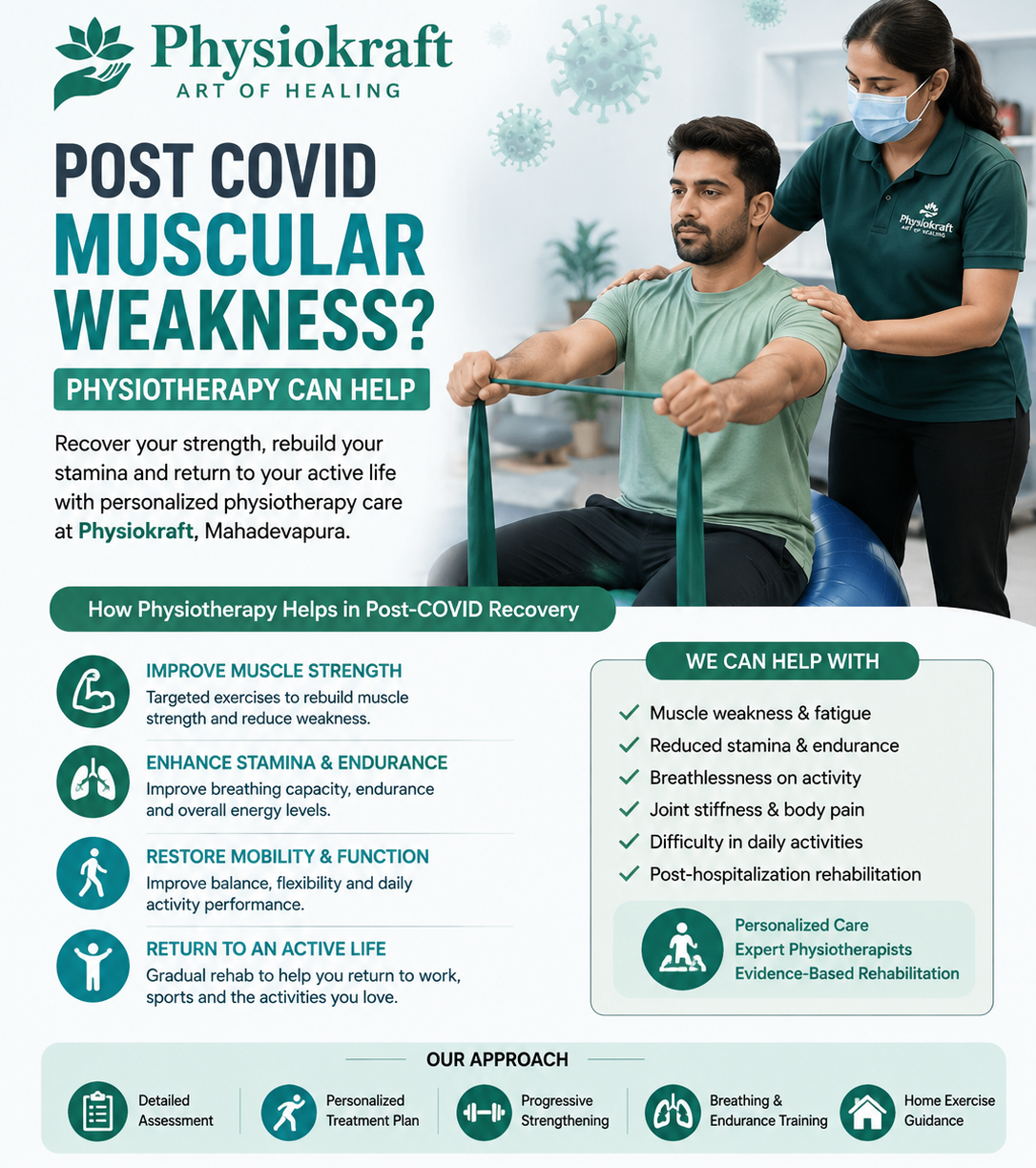
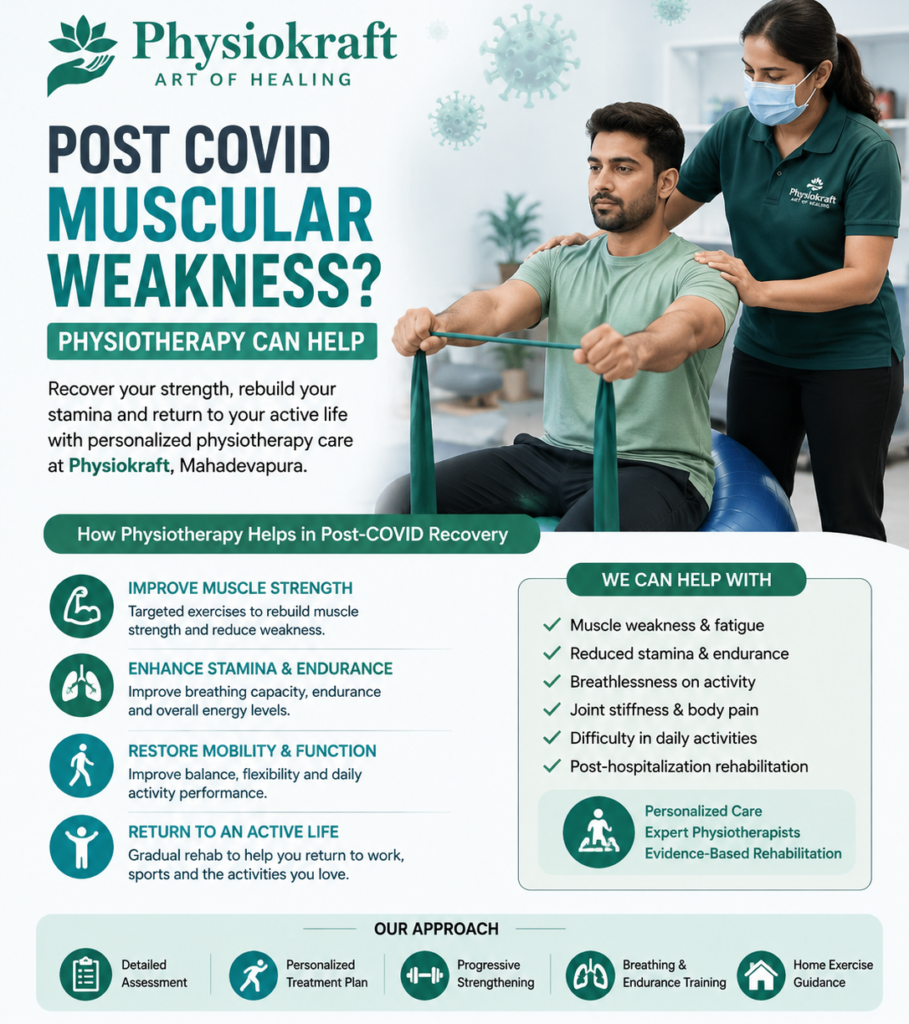
Experiencing muscle weakness after COVID-19? Learn how Post-COVID Muscular Weakness Mahadevapura Banglore physiotherapy can help with muscular weakness, fatigue, reduced mobility and poor endurance through personalized strengthening and rehabilitation at PhysioKraft, Mahadevapura.Discover how personalized physiotherapy, strengthening exercises, mobility training and gradual rehabilitation can help you return to daily activities in Mahadevapura.
Post-COVID Muscular Weakness Mahadevapura: What Is It?
Recovering from COVID-19 can take time, and some people experience ongoing symptoms even after the acute infection has resolved. These may include muscle weakness, reduced physical endurance, fatigue, breathlessness during activity and difficulty returning to normal daily activities.
A period of bed rest, reduced physical activity and illness-related deconditioning can contribute to loss of muscle strength and physical capacity.
Physiotherapy can play an important role in helping suitable patients gradually rebuild strength, mobility, endurance and confidence in movement. At Physiokraft our experienced Physiotherapists will provide detail assessments, rehab plan to ensure better outcomes for the people who suffering from Post-COVID Muscular Weakness Mahadevapura
Why Can Post-COVID Muscular Weakness occur ?
Several factors may contribute to reduced muscle strength following COVID-19.
1. Reduced Physical Activity
During illness and recovery, people often spend more time resting and become less physically active. Reduced activity can lead to deconditioning and loss of muscle strength.
2. Prolonged Bed Rest
People who have experienced significant illness or hospitalization may spend extended periods in bed. Prolonged inactivity can affect muscle strength, mobility and overall physical capacity.
3. Fatigue
Some people experience persistent fatigue after COVID-19. When fatigue limits normal activity, maintaining or rebuilding physical capacity can become more challenging.
4. Reduced Exercise Tolerance
Some individuals may notice that activities that were previously easy—such as climbing stairs, walking longer distances or performing household tasks—require more effort after recovery.
Common Symptoms of Post-COVID Muscular Weakness
Post-COVID physical limitations can vary considerably between individuals.
Common complaints may include:
- Generalized muscle weakness
- Reduced stamina
- Difficulty climbing stairs
- Difficulty walking for longer periods
- Muscle fatigue during daily activities
- Reduced exercise tolerance
- Difficulty returning to previous fitness levels
- Feeling physically deconditioned after prolonged inactivity
- Reduced confidence with physical activity
Persistent symptoms should be appropriately assessed, particularly when they significantly affect daily life.
How Can Physiotherapy Help With Post-COVID Muscular Weakness?
Physiotherapy can help create a gradual and individualized rehabilitation program based on your symptoms, physical capacity and functional goals.
The aim is not to push the body excessively, but to progressively rebuild physical capacity while monitoring symptoms.
1. Physiotherapy Assessment
The first step is understanding your current physical condition.
A physiotherapist may assess:
- Muscle strength
- Joint mobility
- Balance
- Walking ability
- Functional movements
- Exercise tolerance
- Fatigue during activity
- Ability to perform daily activities
This assessment helps determine an appropriate starting point for rehabilitation.
2. Progressive Strengthening
If muscle weakness is related to deconditioning, a progressive strengthening program can help rebuild muscle capacity.
Exercises may initially include simple movements such as:
- Sit-to-stand exercises
- Supported squats
- Heel raises
- Step exercises
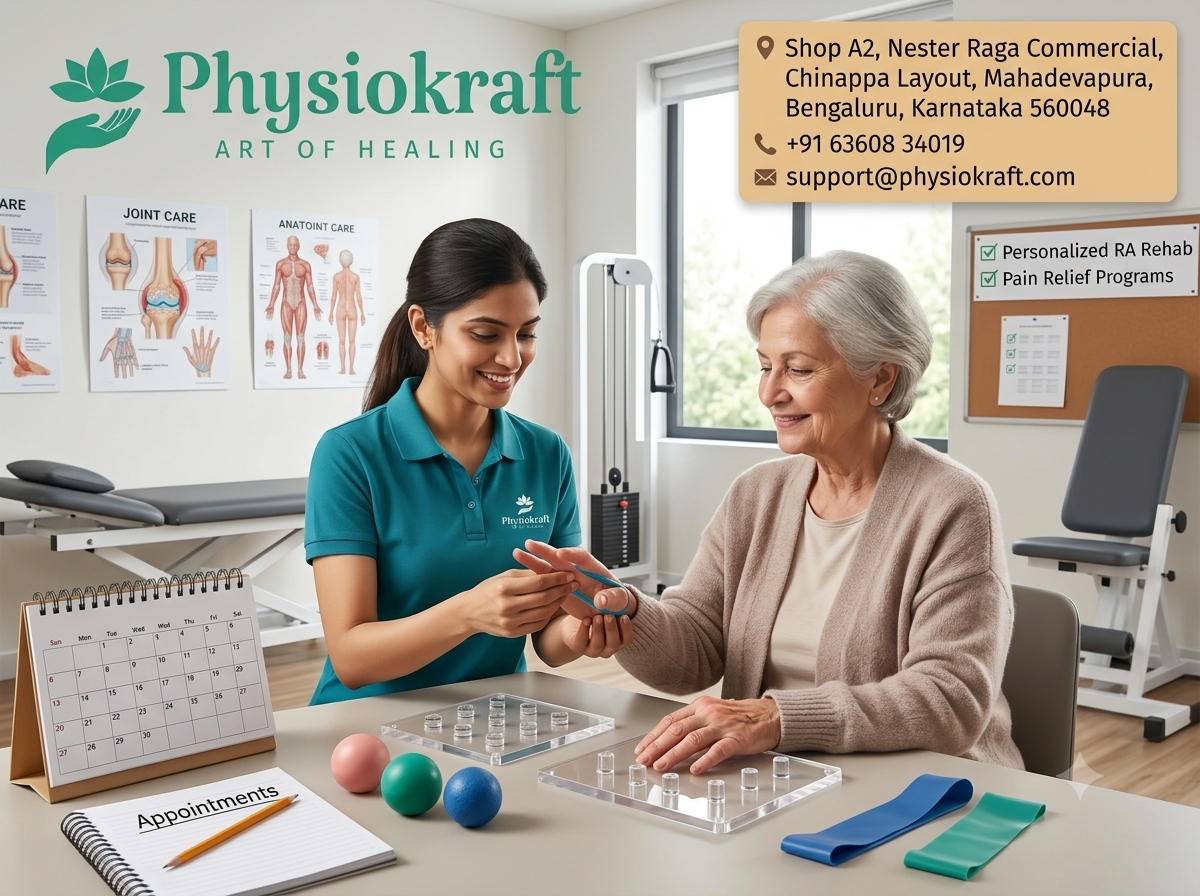
- Resistance-band exercises
- Functional strengthening exercises
As strength improves, exercises can gradually become more challenging.
The progression should be individualized rather than based on a fixed exercise routine.
3. Improving Mobility
Periods of inactivity can result in stiffness and reduced mobility.
Physiotherapy may include appropriate mobility exercises for areas such as:
- Spine
- Shoulders
- Hips
- Knees
- Ankles
Improved mobility can make everyday movements easier and support the return to normal physical activity.
4. Balance and Functional Training
Some people may feel less steady or confident after prolonged illness and inactivity.
A physiotherapist may incorporate:
- Balance exercises
- Sit-to-stand training
- Step training
- Walking practice
- Functional movement exercises
These exercises are designed to improve confidence and independence with everyday activities.
5. Gradual Improvement of Endurance
After COVID-19, some people may find that their exercise tolerance is lower than before.
A rehabilitation program may gradually build tolerance for activities such as:
Short walking → Longer walking → Functional activities → Structured exercise
The appropriate progression depends on the individual’s symptoms and response to activity.
6. Breathing and Respiratory Rehabilitation
For people who have ongoing respiratory limitations following COVID-19, appropriate breathing exercises and respiratory rehabilitation may form part of their physiotherapy program.
However, breathing difficulties can have many causes. Persistent or worsening breathlessness should be medically assessed rather than assumed to be caused solely by deconditioning.
7. Pacing and Activity Management
One of the important aspects of post-COVID rehabilitation is understanding how to balance activity and recovery.
If physical activity consistently causes a significant worsening of symptoms, simply exercising harder may not be appropriate.
A physiotherapist can help you identify an appropriate level of activity and progress gradually according to your individual response.
Physiotherapy Exercises for Post-COVID Muscular Weakness
The exercises used during rehabilitation depend on your current strength, symptoms and functional capacity.
Some people may begin with simple exercises such as:
Sit-to-Stand
Repeatedly standing up from a chair in a controlled manner can help improve functional leg strength.
Heel Raises
Heel raises can help strengthen the calf muscles and improve lower-limb function.
Resistance-Band Exercises
Resistance bands can provide a gradual way to strengthen the upper and lower limbs.
Walking
Walking can be progressively increased when appropriate and tolerated.
Balance Exercises
Simple balance exercises can help improve stability and confidence.
Important: There is no single exercise program that is suitable for everyone recovering from COVID-19. Rehabilitation should be individualized, particularly when significant fatigue, breathlessness or other persistent symptoms are present.
How Long Does Post-COVID Muscular Weakness Last?
Recovery varies considerably from person to person.
Some individuals recover their strength relatively quickly, while others may experience reduced physical capacity for a longer period.
Factors that can influence recovery include:
- Severity of the original illness
- Duration of inactivity
- Hospitalization or prolonged bed rest
- Pre-existing fitness level
- Current symptoms
- Sleep and recovery
- Ability to gradually increase activity
A physiotherapy assessment can help establish a safe starting point and track functional progress over time.
When Should You See a Physiotherapist?
Consider a physiotherapy assessment if you are experiencing:
- Persistent muscle weakness after COVID-19
- Difficulty returning to exercise
- Reduced walking tolerance
- Difficulty climbing stairs
- Reduced physical stamina
- Weakness after prolonged inactivity
- Difficulty performing normal daily activities
- Loss of strength after hospitalization or extended bed rest
A physiotherapist can help determine your current physical capacity and develop an individualized rehabilitation plan.
When Should You Seek Medical Assessment?
Not all post-COVID symptoms are caused by muscle weakness or deconditioning.
Seek appropriate medical evaluation for symptoms such as:
- New or worsening chest pain
- Severe or worsening breathlessness
- Fainting or near-fainting
- New significant heart-related symptoms
- Severe unexplained weakness
- Other symptoms that are sudden, severe or concerning
Physiotherapy rehabilitation should be appropriately coordinated with medical care when neces
Post-COVID Muscular Weakness
Physiotherapy in Mahadevapura, Bangalore
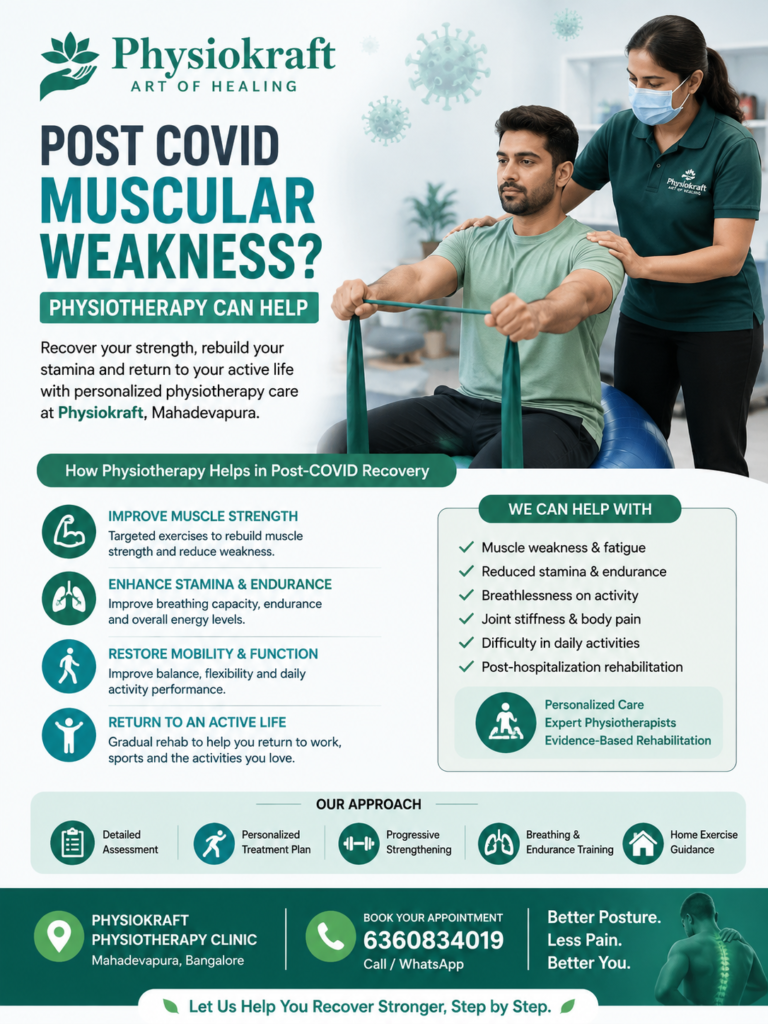
If you are experiencing Post-COVID Muscular Weakness in Mahadevapura, physiotherapy may help you gradually rebuild strength, mobility, endurance and confidence in physical activity.
At PhysioKraft Physiotherapy Clinic, Mahadevapura, rehabilitation can be tailored to your current functional capacity and goals.
Our physiotherapy approach may include:
- Detailed physiotherapy assessment
- Progressive strengthening
- Mobility exercises
- Functional rehabilitation
- Balance training
- Walking and endurance progression
- Activity-management guidance
- Individualized home exercise programs
The goal is to help you move better, become stronger and gradually return to your daily activities and exercise routine.
Visit PhysioKraft Physiotherapy Clinic
PhysioKraft – Art of Healing
Mahadevapura, Bangalore
📞 Call / WhatsApp: 6360834019
Better Posture. Less Pain. Better You.
Get Directions to PhysioKraft on Google Maps
Frequently Asked Questions
Can physiotherapy help with muscle weakness after COVID-19?
Physiotherapy can help suitable patients address weakness and deconditioning through individualized strengthening, mobility, functional and endurance-based rehabilitation.
What exercises are good after COVID-19?
The appropriate exercises depend on your current symptoms and physical capacity. Some people may begin with gentle mobility, strengthening and walking exercises before gradually progressing.
How can I regain strength after COVID-19?
A gradual rehabilitation program combining appropriate strengthening, functional activity, mobility and recovery strategies can help rebuild physical capacity.
Is it normal to feel weak after COVID-19?
Some people experience reduced strength and exercise tolerance after an illness. Persistent or significant weakness should be assessed to determine possible contributing factors.
Can I start gym workouts immediately after COVID-19?
Returning to intense exercise should depend on your recovery, symptoms and physical capacity. A gradual return may be more appropriate than immediately resuming previous training intensity.
Can physiotherapy help after hospitalization?
Yes. People who have experienced prolonged inactivity or hospitalization may benefit from individualized rehabilitation to address strength, mobility and functional limitations.
Conclusion
Post-COVID muscular weakness can make everyday activities and exercise feel more difficult than before. With an appropriate assessment and gradual, individualized physiotherapy rehabilitation, many people can work towards improving their strength, mobility and physical capacity.
If you are struggling with persistent weakness or difficulty returning to your normal activities, consider getting assessed rather than trying to push through the symptoms.
Looking for post-COVID physiotherapy in Mahadevapura? Contact PhysioKraft Physiotherapy Clinic to discuss an appropriate rehabilitation assessment.