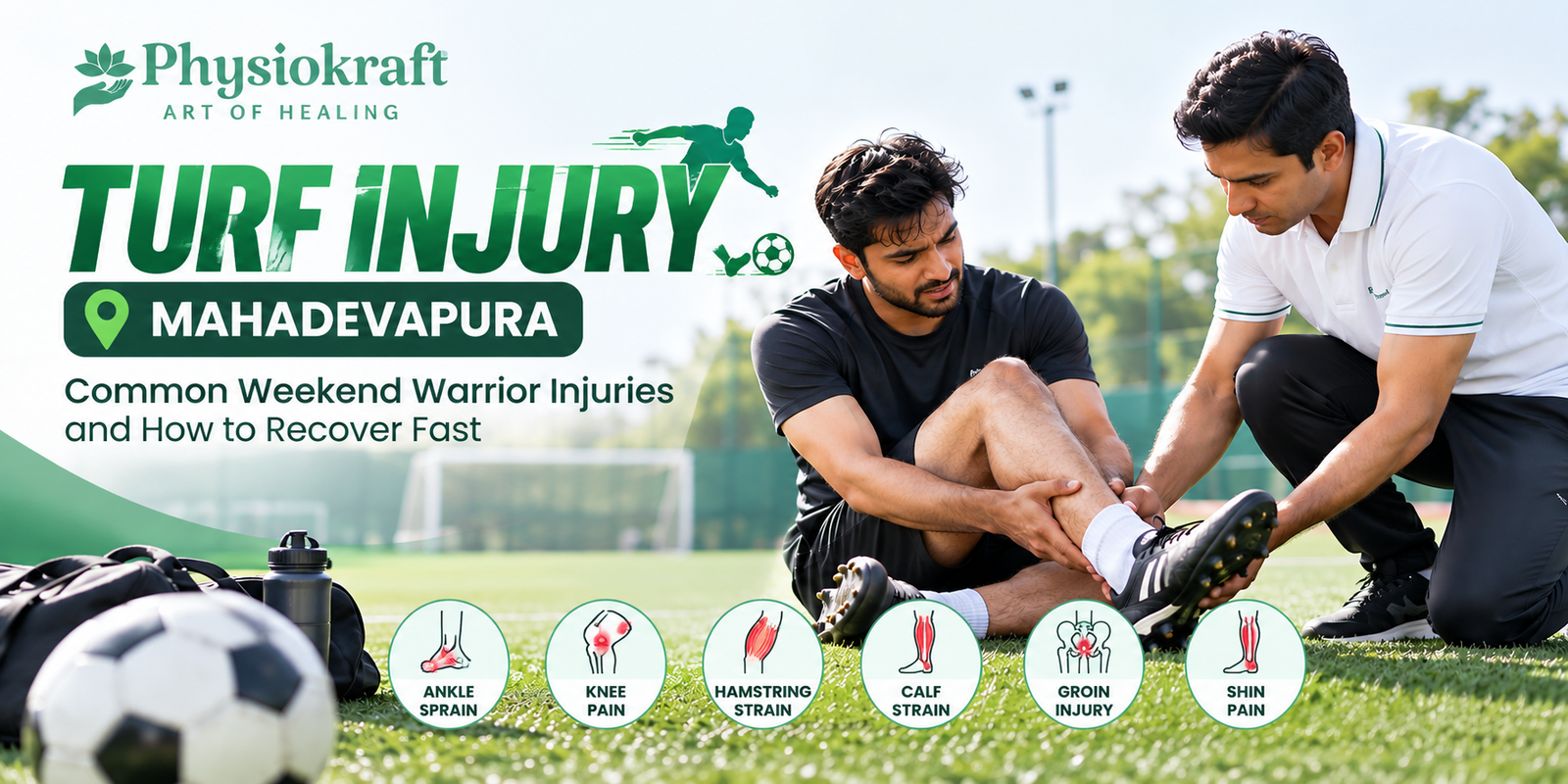

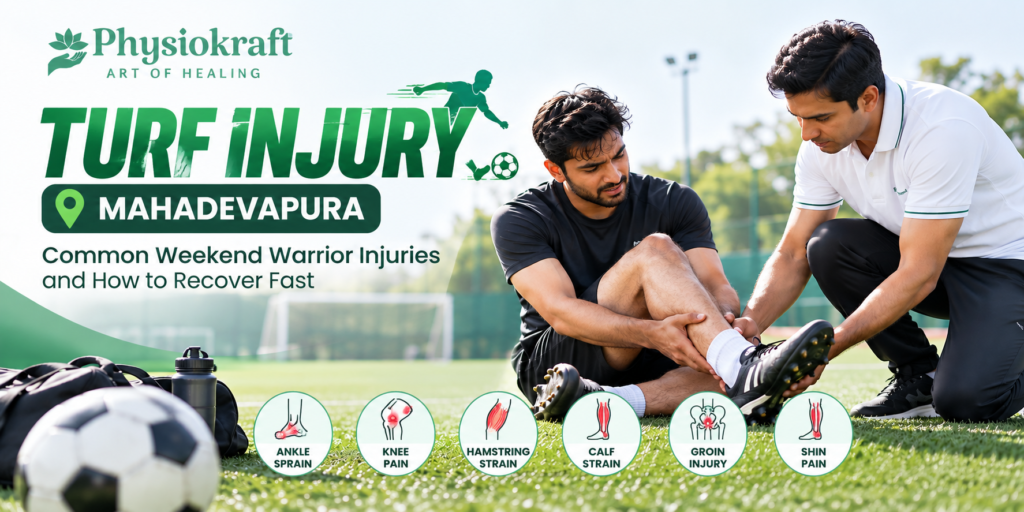
Weekend turf games are a great way to stay active, compete with friends, and enjoy your favourite sport. But when most of your physical activity is concentrated into one or two days a week, your body may not always be prepared for sudden sprinting, jumping, twisting, and rapid changes of direction.
This is why weekend warriors are more likely to experience sports and turf injuries, particularly when they return to intense activity after several days of limited exercise.
If you have developed Turf injury after playing football, cricket, badminton, or another sport on a turf ground, early physiotherapy can help you recover safely and return to your game with greater confidence. We make it easy for the locals at Physiokraft physiotherapy mahadevapura a near by Clinic helps for better assesment , treatment plan and reback to sports without causing any injury.
What Is a Turf Injury?
A turf injury is any muscle, ligament, tendon, joint, or other musculoskeletal injury that occurs while participating in sports on an artificial or natural turf surface.
Turf sports often involve:
- Sudden acceleration and stopping
- Sprinting and rapid changes in direction
- Jumping and landing
- Tackling or contact
- Twisting movements
- Repetitive running
- Uneven or unexpected loading of the lower limb
When these movements are performed without adequate warm-up, conditioning, recovery, or technique, the risk of injury can increase.
Common Weekend Warrior Turf Injury
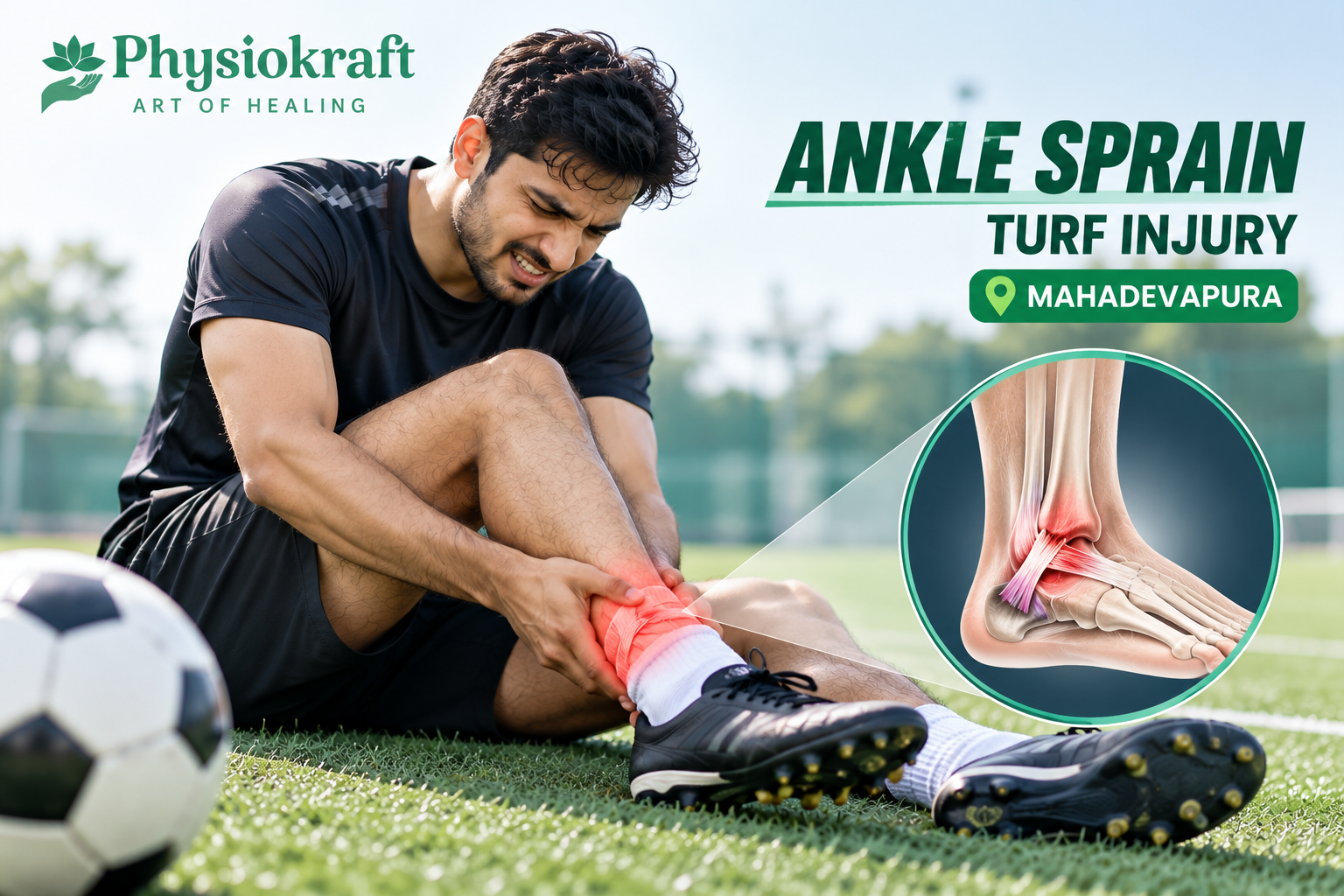
1. Ankle Sprain
Ankle sprains are among the most common sports injuries. They can occur when the foot rolls or twists suddenly while running, landing, or changing direction.
Common symptoms include:
- Ankle pain
- Swelling
- Difficulty walking
- Bruising
- Reduced ankle movement
- Pain while running or jumping
A mild sprain may improve with appropriate rehabilitation, but returning to sport too quickly can increase the risk of recurrent ankle sprains.
2. Hamstring Strain
A sudden sprint or explosive movement can place significant stress on the hamstring muscles at the back of the thigh.
You may experience:
- Sudden pain at the back of the thigh
- Tightness
- Pain while accelerating
- Difficulty stretching the leg
- Reduced running speed
Physiotherapy rehabilitation can gradually restore strength, flexibility, running capacity, and sport-specific performance.
3. Calf Muscle Strain
Repeated sprinting and sudden acceleration can overload the calf muscles.
A calf strain may cause pain during:
- Running
- Jumping
- Pushing off the ground
- Climbing stairs
- Stretching the calf
Returning to sport before adequate recovery can increase the risk of reinjury.
4. Knee Pain
Weekend athletes may develop knee pain after repeated running, jumping, squatting, or sudden changes in direction.
Possible causes include muscle overload, patellofemoral pain, tendon irritation, or ligament/meniscal injuries.
Persistent knee pain should not simply be ignored or masked with painkillers. A physiotherapy assessment can help identify the contributing factors and guide rehabilitation.
5. Groin and Adductor Strain
Football and other turf sports involve frequent lateral movements, kicking, acceleration, and sudden direction changes.
These movements can overload the groin and adductor muscles, resulting in pain during:
- Running
- Kicking
- Changing direction
- Sideways movements
- Getting in and out of a car
6. Shin Pain
Suddenly increasing running volume can place additional stress on the muscles and tissues around the shin.
Shin pain may become noticeable during or after running and can interfere with your ability to participate in sports.
If shin pain is persistent, severe, or progressively worsening, an appropriate clinical assessment is important to rule out more significant injuries.
7. Shoulder and Upper-Limb Injuries
Turf sports aren’t limited to lower-limb injuries. Falling, throwing, diving, or direct contact can cause shoulder, elbow, wrist, or hand injuries.
These may include muscle strains, ligament injuries, or joint-related problems.
Why Do Weekend Warriors Get Injured?
One of the biggest problems is the “weekend warrior” pattern—being relatively inactive during the week and suddenly performing high-intensity exercise on the weekend.
Other contributing factors may include:
- Inadequate warm-up
- Poor strength or conditioning
- Sudden increase in training intensity
- Muscle fatigue
- Previous injuries
- Poor movement mechanics
- Inadequate recovery
- Incorrect footwear
- Returning to sport too soon after an injury
Your body needs time to adapt to high-speed and high-load movements.
How Can You Recover Faster After a Turf Injury?
The goal of rehabilitation isn’t simply to make the pain disappear. A successful recovery should restore movement, strength, balance, confidence, and sport-specific ability.
Step 1: Get the Injury Assessed
If pain persists after your game, don’t assume it is just normal muscle soreness.
A physiotherapist can assess:
- Pain and swelling
- Joint mobility
- Muscle strength
- Flexibility
- Balance and stability
- Movement patterns
- Functional and sport-specific movements
This helps determine an appropriate rehabilitation plan.
Step 2: Control Pain and Swelling
Depending on the injury, your physiotherapist may recommend appropriate activity modification and other strategies to manage pain and swelling during the early stage.
Avoid repeatedly testing an injured area by playing through significant pain.
Step 3: Restore Movement
Stiffness after an injury can affect how you walk, run, squat, jump, or change direction.
Your rehabilitation program may include targeted mobility exercises to gradually restore normal movement.
Step 4: Build Strength
Strength is an important part of returning to turf sports.
Depending on your injury, rehabilitation may target:
- Calf strength
- Hamstring strength
- Quadriceps strength
- Glute strength
- Core strength
- Ankle stability
- Single-leg control
Step 5: Progress to Sport-Specific Training
Being able to walk without pain does not necessarily mean you are ready to play a full match.
A structured return-to-sport program can gradually introduce:
Walking → jogging → running → acceleration → deceleration → cutting → jumping → sport-specific drills → return to play
This allows your body to progressively adapt to the demands of your sport.
How Can You Prevent Turf Injuries?
You don’t have to stop playing your favourite sport to reduce your injury risk.
Try to:
- Warm up before playing
- Maintain strength throughout the week
- Gradually increase running and training volume
- Include balance and single-leg exercises
- Wear suitable sports footwear
- Avoid playing at maximum intensity when excessively fatigued
- Allow adequate recovery between intense sessions
- Complete rehabilitation properly after previous injuries
For regular weekend players, even 2–3 short strength and conditioning sessions during the week can be valuable for preparing the body for weekend sports.
When Should You See a Physiotherapist?
Consider getting assessed if you have:
- Persistent pain after playing
- Significant swelling or bruising
- Difficulty putting weight on the leg
- Reduced joint movement
- Repeated ankle or knee injuries
- Pain that keeps returning when you play
- Weakness or instability
- Difficulty returning to your previous sporting level
If you heard a sudden “pop,” cannot bear weight, have significant deformity, or suspect a serious ligament, tendon, or fracture injury, seek prompt medical evaluation.
Turf Injury Physiotherapy in Mahadevapura
If you’ve picked up a turf injury in Mahadevapura, physiotherapy can help you understand the injury, manage symptoms, rebuild strength, and safely progress toward your sporting goals.
At PhysioKraft, our physiotherapy approach can include assessment, manual therapy where appropriate, exercise-based rehabilitation, movement retraining, strength and conditioning, and sport-specific rehabilitation.
Whether you’ve developed an ankle sprain, knee pain, hamstring strain, calf injury, groin pain, shin pain, or another sports-related problem, the rehabilitation program should be based on your individual condition and sporting requirements.
Don’t Let a Weekend Injury Keep You Off the Turf
A weekend injury doesn’t necessarily mean you have to give up your favourite sport.
The right rehabilitation plan can help you progressively regain strength, mobility, stability, and confidence so you can work toward returning to the activities you enjoy.
Looking for turf injury physiotherapy in Mahadevapura? Book an assessment at PhysioKraft and get a personalised rehabilitation plan for your sports injury.
Frequently Asked Questions
1. How long does a turf injury take to heal?
Recovery time depends on the type and severity of the injury. A mild muscle strain or ankle sprain may improve within weeks, while more significant injuries can require a longer rehabilitation period.
2. Can I play through a turf injury?
Playing through significant pain is generally not a good strategy. Continuing high-intensity activity may aggravate some injuries or delay recovery.
3. When can I return to football after an ankle sprain?
Return to football should be based on recovery of pain-free movement, strength, balance, agility, and sport-specific function rather than simply the number of days since the injury.
4. Is physiotherapy useful for weekend warrior injuries?
Yes. Physiotherapy can help identify contributing factors, restore mobility and strength, improve movement control, and progressively prepare you for a return to sport.
5. Where can I get sports injury physiotherapy in Mahadevapura?
PhysioKraft Physiotherapy provides sports rehabilitation services in Mahadevapura, Bangalore, for a range of musculoskeletal and sports-related conditions.